
VDF cyber operators join multiagency Cyber Fortress 25 response exercise
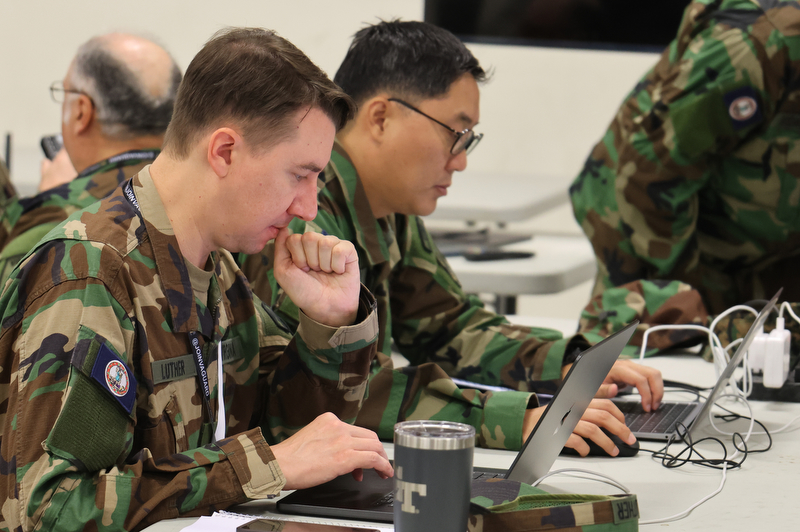
VIRGINIA BEACH, Va. – Virginia Defense Force personnel assigned to the 31st Cyber Battalion, 1st Regiment joined National Guard Soldiers and Airmen as they partnered with military and civilian cyber operators Aug. 2-17, 2025, at the State Military Reservation in Virginia Beach, Virginia, during Cyber Fortress 25. They conducted training and were part of the enclaves in a “force-on-force” scenario to simulate the process they would follow to respond to and mitigate a cyber attack on an electricity cooperative.
The joint, interagency, intergovernmental multinational exercise focused on electric cooperatives and provided an opportunity to test Virginia’s cyber response plan, better prepare for future collective responses and build resiliency, explained Col. David Garner, the Information Operations Support Center commander and exercise director. The Fort Belvoir-based 91st Cyber Brigade and IOSC hosted the exercise.
“The VDF’s 31st Cyber Battalion continues to build cybersecurity capability and capacity supporting the Commonwealth of Virginia’s cyber defense posture,” said Col. Gerald A. Mazur, commander of the 91st. “During the first week of Cyber Fortress, members of the VDF received operational technology cybersecurity, cyber threat intelligence and forensics training. In week two, the VDF partnered with an electric cooperative, participated in a force-on-force exercise as a “Blue Team” defending an electric cooperative representative network from simulated cyber attacks based on real world events.”
Garner echoes Mazur’s assessment of VDF support to Cyber Fortress.
“The VDF is a valued partner,” Garner said. ‘Many of the VDF 31st Cyber Battalion work in the information technology and cyber security sectors in their civilian capacity, which provides them with the skillsets needed to understand network operations, what makes networks vulnerable to cyber exploit and provide recommendations for ways to harden municipal networks. During Cyber Fortress their enclave did well in analyzing the details and scope of the cyber-attack.”
Garner said the value of having the VDF attend Cyber Fortress is providing a great environment for them to get the training and experience they need to assist in a responding to a cyber attack on the commonwealth.
“Just like in other situations where the they are called, the VDF’s cyber professionals increase the capacity of the commonwealth’s total force,” Garner said.
Read more about Cyber Fortress 25 at https://vngpao.info/2p8wf87b.
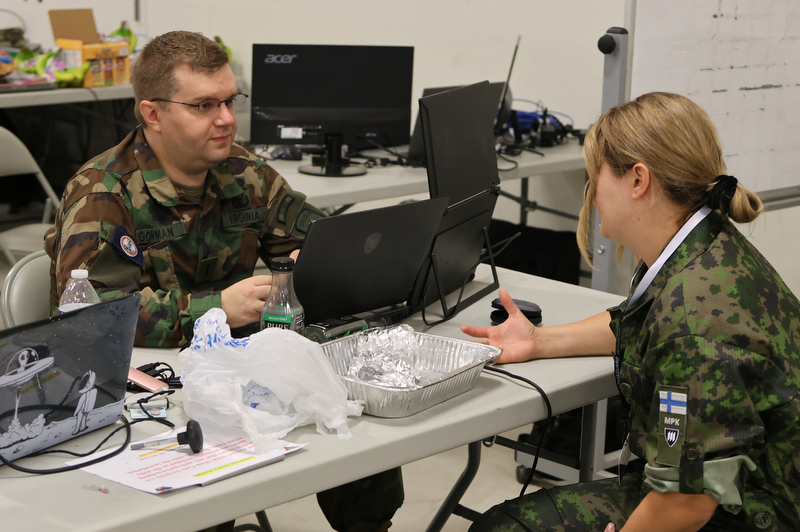
The key training objectives for the VDF was integration with the other services, interagency coordination, support to the commonwealth’s electric energy sector and training courses in cyber tradecraft, explained Lt. Col. (Va.) John J. Congson, commander of the 31st Cyber Battalion.
“The 31st Cyber Battalion routinely partners with the Virginia Army National Guard 91st Cyber Brigade in defense of the commonwealth,” Congson said “We continued this effort in this exercise both as a participant and helping manage the exercise for a successful event for all participants. We also worked with the U.S. Marine Corps for the first time as they were part of our enclave for the live network defensive.”
The training provided to the Virginia Army National Guard and the VDF postures both organizations for the upcoming challenges in cyberspace, Congson said.
“We closely align with the Virginia Army National Guard for our tasking,” Congson said. “As their tasking expands, we can expect the VDF to also grow in the same direction.”
Members of the VDF assisted with exercise planning and execution where they put their extensive civilian-acquire experience to work, explained Sgt. 1st Class Nick Kuriger, operations noncommissioned officer in the 31st Cyber Battalion.
During the planning process, VDF cyber experts helped create exercise scenarios and helped shape the framework describing how real-world adversaries might behave during a cyber attack to improve the realism of the exercise, Kuriger said.
VDF personnel demonstrated proficiency in teaching cyber security and were asked to facilitate an overview course dealing with malware analysis, assisted 91st Cyber Brigade personnel provide technical support where the fielded support request and exercise communications and used range intelligence and generative AI to create intelligence reports sent to the exercise fusion center mirroring what they would need in real world responses, Kuriger said.
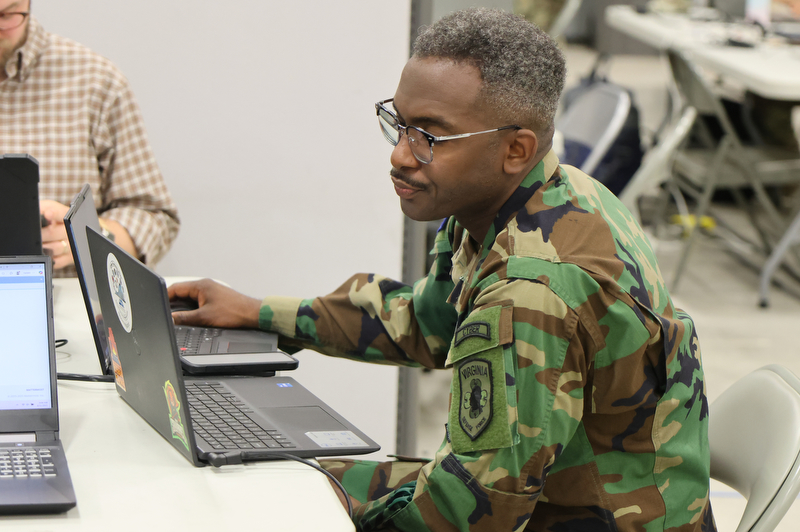
“VDF members greatly benefited by specific training during the first week,” Kuriger said. “The exercises in the second week gave the VDF incident leaders an opportunity to test incident response management tools and employ both tactical and strategic deployment of VDF incident response capabilities. They directed the team to find and respond to indicators of compromise, and this gave the incident leaders a better understanding of the knowledge, skills and abilities VDF personnel bring to the fight and areas needed for improvement.”
Brig. Gen. (Va.) Rich Diddams, commander of the VDF, stress the importance of the VDF cyber mission in his quarterly update.
“The value of our cybersecurity mission lies in its direct impact on the safety and security of Virginia’s citizens,” Diddams said. “Our support provides the first line of defense against cyber threats that could disrupt essential services, compromise personal data, or undermine public trust. Whether we’re securing communication networks for emergency response, collaborating with state agencies to fortify infrastructure or training to counter sophisticated cyberattacks, our work ensures that Virginia remains a safe and thriving place to live, work and serve.”
Read the full message at https://vdfpio.info/yzmammxk.
###