Virginia Defense Force teams with Marines at Cyber Fortress 26
VIRGINIA BEACH, Va. — Members of the Virginia Defense Force’s 31st Cyber Battalion, 1st Regiment partnered with military and civilian cyber operators July 25-Aug. 8, 2026, at the State Military Reservation in Virginia Beach, Virginia, during a joint, interagency, intergovernmental, multinational exercise hosted by the Virginia National Guard’s 91st Cyber Brigade and the Virginia Department of Emergency Management called Cyber Fortress 26.
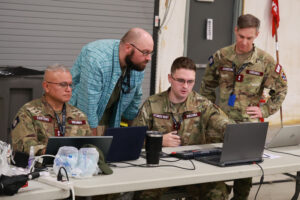 “VDF personnel have supported Cyber Fortress for several years, and we know we can count on them to bring valuable experience from their civilian careers where many of them work in IT or cyber security related jobs,” said Col. David J. Garner, Cyber Fortress 26 exercise director and commander of the VNG’s Information Operations Support Center. “It is always nice to collaborate and work with our VDF colleagues so we are able to continue develop relationships and build a team that will be ready to respond in times of need for the Commonwealth of Virginia.”
The exercise brings together Active, Reserve and National Guard components of the U.S. military and NATO partners, along with local, state and federal government agencies and civilian partners from private industry to respond to a simulated real-world cyber incident. The exercise emphasizes operational technology and emerging technologies as critical areas of focus.
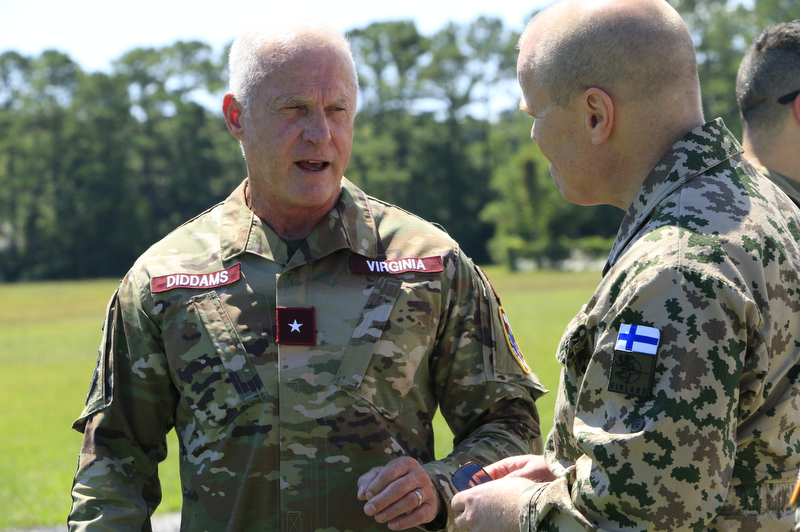
“The unit’s participation moved beyond individual skill development, focusing heavily on high-level integration and operational interoperability,” explained Maj. (Va.) Karl Blinkinsop, 31st Cyber Battalion commander. “By working alongside active-duty Marines, international partners from the Finnish Defense Force, and various National Guard counterparts, the Virginia Defense Force demonstrated that its cyber operators are fully prepared to fight as part of a unified force.”
VDF personnel successfully completed primary training tracks aligned with Department of Defense standards, he said. The training included operational technology mastery where operators received advanced training led by national experts from the SANS Institute and Dragos, focusing on Industrial Control Systems and Supervisory Control and Data Acquisition systems and network analysis.
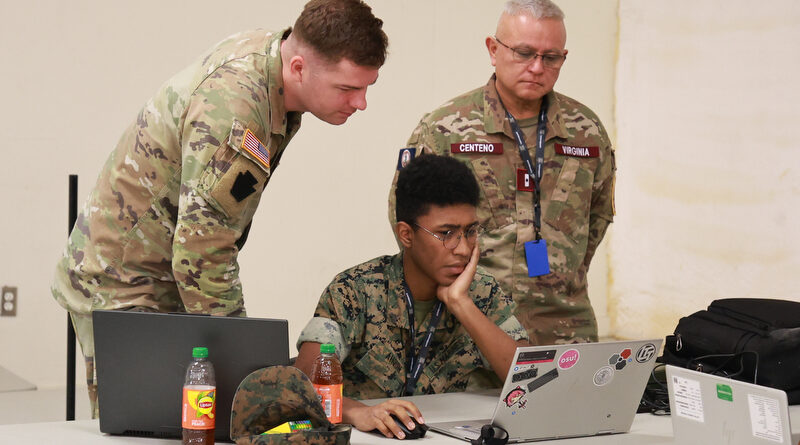
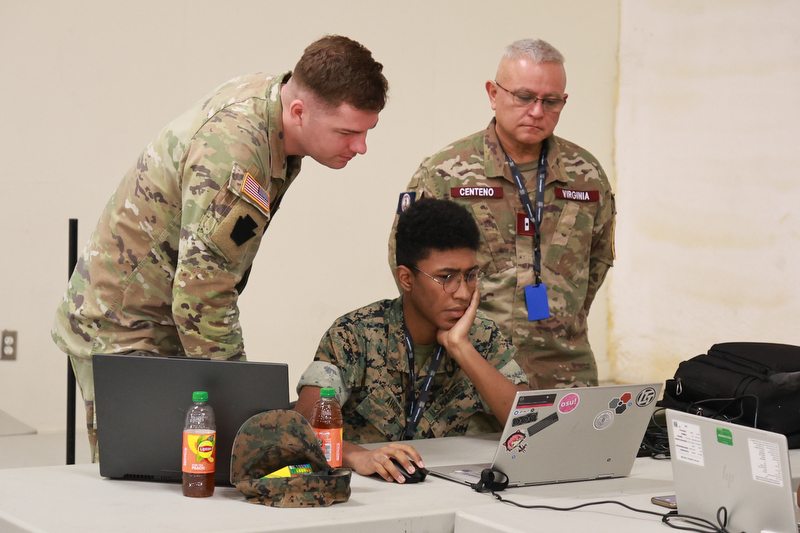
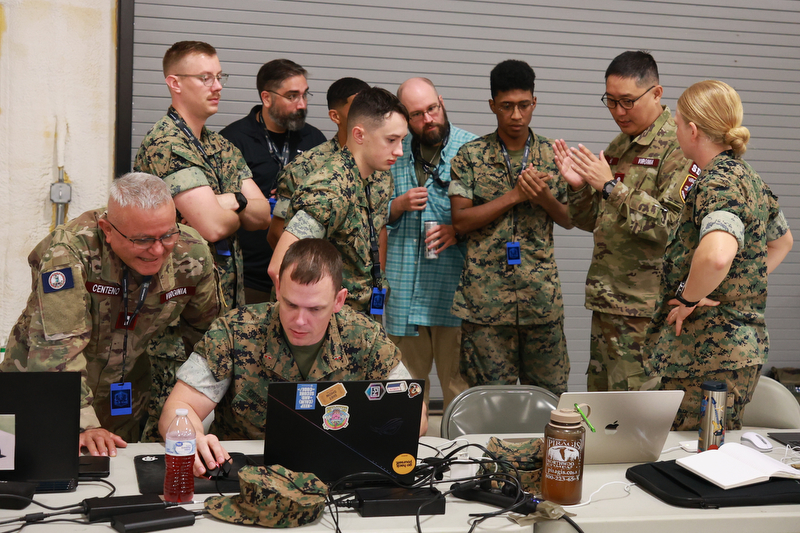
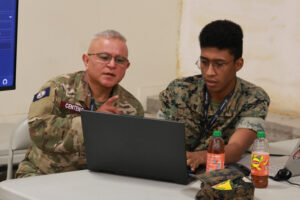 The VDF worked together in the same enclave as active duty Marines assigned to 3rd Network Battalion, Marine Corps Cyber Operations Group, Marine Corps Forces Cyberspace Command based at Camp Foster in Okinawa, Japan. The collaboration came from the connection between a currently serving member of the VDF and his civilian job with the U.S. Marine Corps.
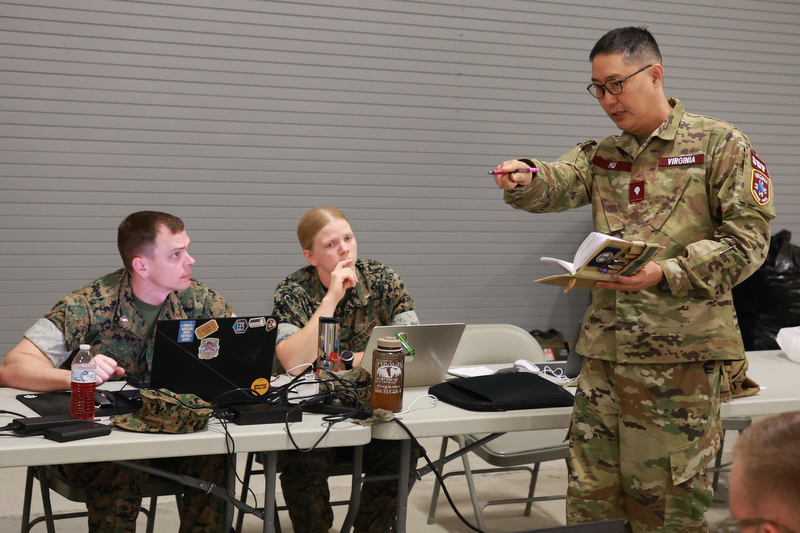
Spc. (Va.) Peter Hu is a VDF cyber operator and also is the civilian director of the Department of Defense Information Network and Cyber Operations for 3rd Network Battalion where he oversees the operation and defense of the Marine Corps Enterprise Network across the U.S. Pacific Command area of responsibility from Hawaii to Australia.
Hu explained the partnership with Marines and VDF began three years ago with the VDF connected with a team of U.S. Marine Corps Forces Reserve based in New Orleans, Louisiana, taking part in that year’s Cyber Fortress exercise.
“At the exercise, the team provided very positive feedback in our internal after action reviews,” Hu said. “Recognizing the value of the joint training opportunity during last year’s Cyber Fortress planning, I leveraged my dual perspective as a VDF member and a Marine Corps civilian to organize an active-duty Marine cyber team to continue this relationship.”
Hu thanked the VDF leadership for their support and said last year’s success gave the Marine Corps the confidence to expand participation this year to include personnel from Quantico.
He said the primary objectives for Cyber Fortress for the 3rd Battalion Marines were to obtain specialized operational technology security training from national experts, collaborate with skilled National Guard and VDF personnel, and participate in the live-fire cyber range and “Capture the Flag” events.
Hu explained a cyber “Capture the Flag” event is an ethical hacking competition where participants solve computer security puzzles or break into simulated systems to find hidden text strings called “flags.” Finding and submitting a flag proves a challenge is solved and earns points.
During the first week of the exercise, the team received operational technology cybersecurity training led by industry experts including course work and hands-on training with with network analysis tools, culminating in a “Capture the Flag” competition, he said.
Blinkinsop said Chief Warrant Officer 2 (Va.) Joshua Ott, one of 31st Cyber Battalion’s more seasoned operators, scored 10 out of 150+ during the “Capture the Flag,” and battalion leaders are very proud of the capabilities he brings to the commonwealth.
Hu said the skills gained the first week were applied during the second week of the exercise where they partnered with military and civilian cyber professional and industry experts to defend against simulated live attacks on the network.
He said the integration yielded significant mutual benefits.
“The Marines demonstrated rapid response capabilities, organizing into agile sub-teams to analyze, report and defend network terrain,” Hu said. “This showcased active-duty tactical speed and adaptability in a simulated high-threat environment.”
Working with the VDF provided an opportunity to share civilian-acquired skills.
“VDF members with advanced civilian tech industry careers shared critical, real-world expertise in OT networking and security tools, providing the Marines with cutting-edge industry insights,” Hu said.
“This exercise offers a unique opportunity for uniformed service members, civilians and contractors to integrate, train and fight as a unified team in a realistic operational environment defending against potential real-world cyberspace threats,” he said.
In addition to the technical exchange, the VDF, Marines and Finnish Defense Force partners conducted joint formations focused on drill and ceremonies skills. Instructions on Marine Corps drill precision sharpened the movements of the entire joint formation and offered immediate leadership development opportunities for all personnel, Hu said.
Blinkinsop said Cyber Fortress 26 served as a critical evolution in the battalion’s readiness, directly improving the VDF’s capability to support the commonwealth in several key areas. Through training on the Persistent Cyber Training Environment, the same platform utilized by the 91st Cyber Brigade, the exercise helped proved VDF personnel are technically interoperable with the military units they are called to support.
He said a significant readiness outcome was the application of civilian-acquired skills.
“VDF members integrated their real-world tech industry expertise in OT networking and security into the military tactical environment, providing active-duty counterparts with essential, cutting-edge insights,” Blinkinsop said. “Participation in Cyber Fortress 26 proves that the VDF’s 31st Cyber Battalion is more than a volunteer organization. It is an essential, mission-ready component of the Virginia Department of Military Affairs capable of helping to defend the commonwealth’s cyber terrain alongside federal and international partners.”
Read more about Cyber Fortress 26 on the Virginia National Guard web site at https://vngpao.info/5yk9nn2w.

Maj. (Va.) Karl J. Blinkinsop, commander of the Virginia Defense Force’s 31st Cyber Battalion, 1st Regiment, presents challenge coins for outstanding duty performance on behalf of the VDF commander to 2nd Lt. (Va.) Michael Boorman and Spc. (Va.) Peter Hu during Cyber Fortress 26 Aug. 4, 2026, at the State Military Reservation in Virginia Beach, Virginia.
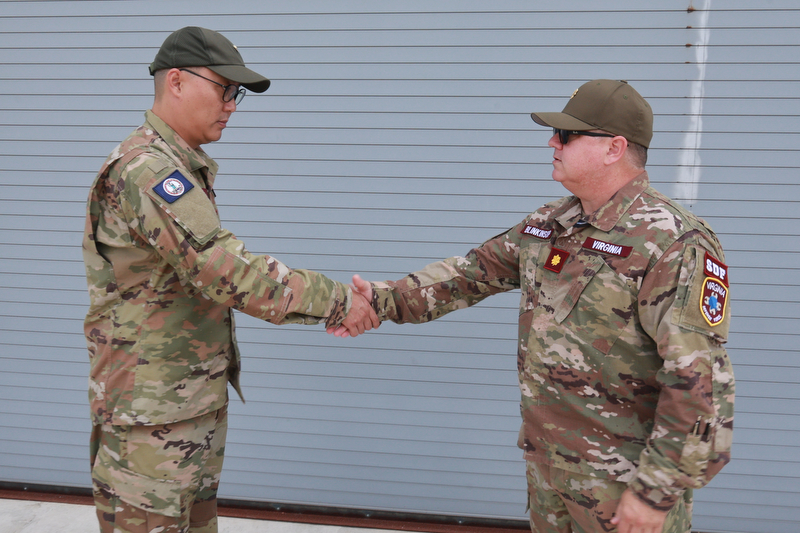
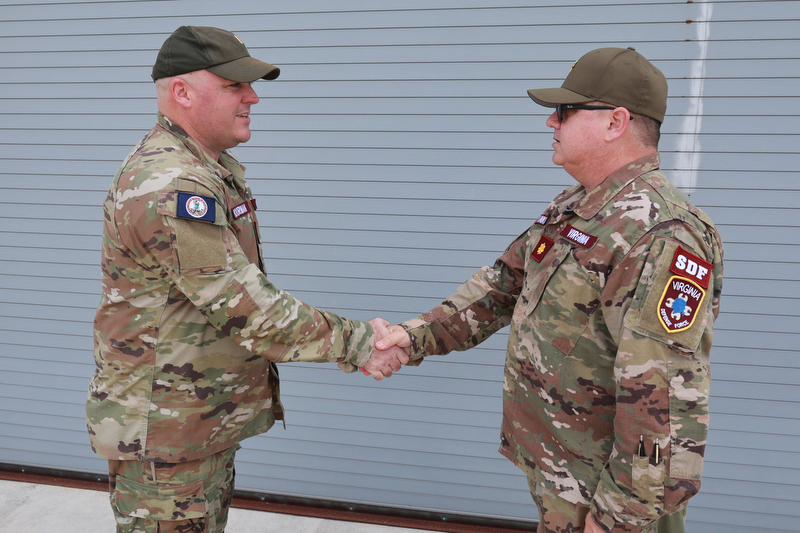
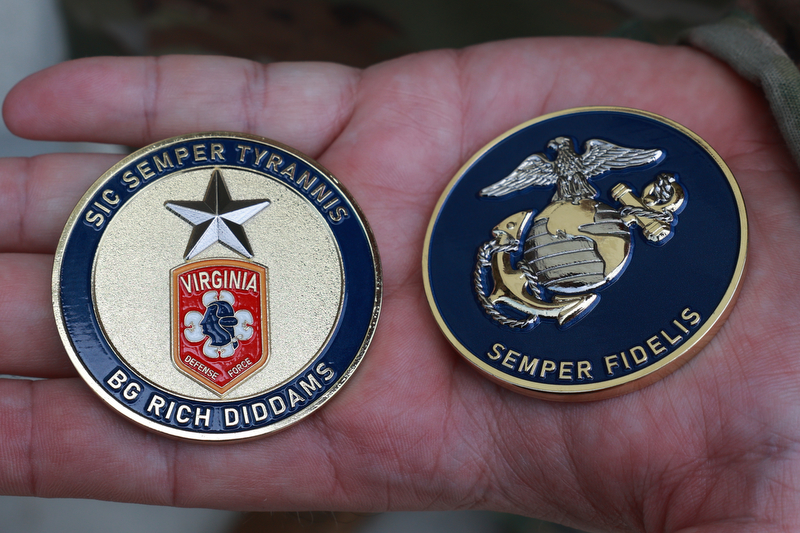
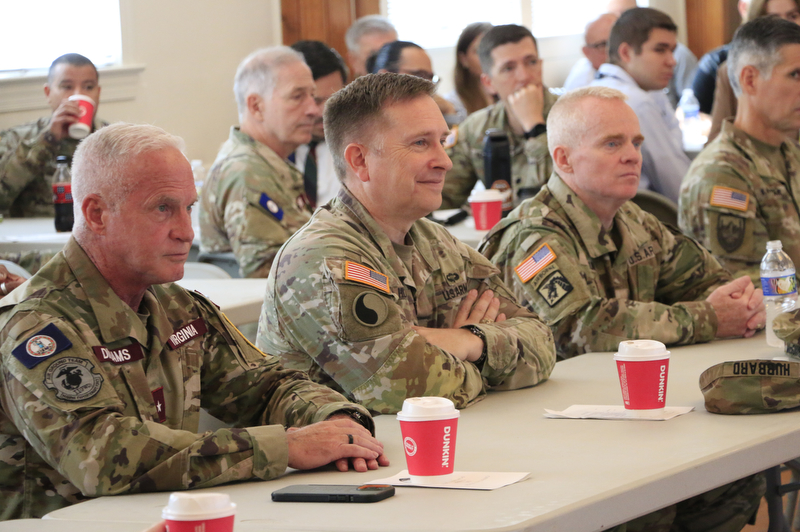
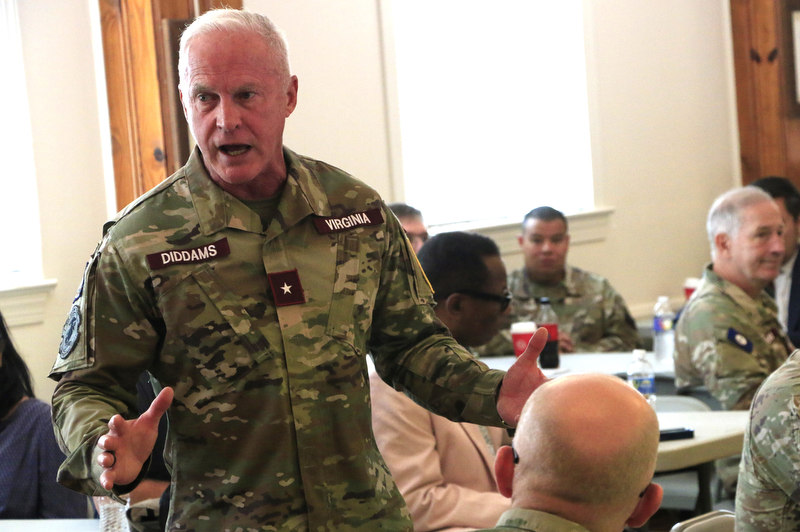
Brig. Gen. (Va.) Rich Diddams, commander of the Virginia Defense Force, joined military and civilian leaders from across the country for the Cyber Fortress 26 Distinguished Visitors Day July 31, 2026, at the State Military Reservation in Virginia Beach, Virginia.